| |
|
Nup98 : Abstract : UCSD-Nature Molecule Pages |
|
|
|---|
| Topic: Biology |
12:23 pm EDT, Aug 25, 2009 |
Marie K Cross, Maureen A Powers Department of Cell Biology, Emory University, GA 30322, US. Nup98 is a 98 kDa protein of the nuclear pore complex (NPC), the large macromolecular structure responsible for trafficking between the nucleus and the cytoplasm. NPC proteins are collectively referred to as nucleoporins, and are typically, but not always, named as Nup followed by the respective molecular weight in kDa. A subset of nucleoporins contains a repeat domain with multiple interspersed copies of a phenylalanine-glycine (FG) core motif. Nup98 is the only metazoan nucleoporin with the glycine-leucine-phenylalanine-glycine (GLFG) variant of these repeats. Here we provide a detailed summary of Nup98 and its many reported functions. The NUP98 gene encodes multiple transcripts that vary as a result of differential splicing. Nup98 is expressed in two major forms: the Nup98 protein derived from a 3 kb messenger RNA (mRNA), or the Nup98-Nup96 polyprotein translated from an 8 kb message. Both forms undergo autocatalyzed proteolysis to release the mature, 90 kDa Nup98 from the amino (N) terminus, and either an 8 kDa peptide or the Nup96 protein from the carboxy (C) terminus. Nup96 is a component of a major structural subcomplex of the NPC. Nup98 is a dynamic nucleoporin that moves on and off the NPC and shuttles between nuclear and cytoplasmic compartments. Nup98 is a key player in RNA export from the nucleus, has a role in the import of some nuclear proteins, and contributes to proper mitotic regulation during cell division. Nup98 is targeted by several viruses to selectively enhance viral expression and, in turn, NUP98 transcription is upregulated by the interferon γ-mediated immune response of the cell. The NUP98 gene is a site of chromosomal translocations that lead to expression of chimeric proteins containing the GLFG repeat domain of Nup98 fused to a variety of partner proteins. These fusions are associated most often with the development of acute myelogenous leukemia. Thus, Nup98 is a remarkably diverse and multi-talented nucleoporin with additional functions that are still being explored. Alternative names for this molecule: 98 kDa nucleoporin; ADAR2; ADIR2; GLFG-repeat containing nucleoporin; Nuclear pore complex protein Nup98; Nuclear pore complex protein Nup98-Nup96; Nucleoporin 98; Nucleoporin 98kD; Nucleoporin 98kDa; Nucleoporin Nup98; NUP196; NUP96; Nup96; NUP98; Nup98; Nup98-Nup96; p97
Nanochick's paper is now available online. Nup98 : Abstract : UCSD-Nature Molecule Pages |
|
Ghost Heart | Popular Science |
|
|
|---|
| Topic: Biology |
1:09 am EDT, Oct 16, 2008 |
In late 2005, cardiac researcher Doris Taylor revived the dead. She rinsed rat hearts with detergent until the cells washed away and all that remained was a skeleton of tissue translucent as wax paper—a ghost heart, as Taylor calls it. She injected the scaffold with fresh heart cells from newborn rats. Then she waited. What she witnessed four days later, once the cells had a chance to make themselves at home, was astonishing. "We could see these little areas that were beginning to beat," says Taylor, director of the University of Minnesota's Center for Cardiovascular Repair. "By eight days, we could see the whole heart beating. The first time that happened, it was like ‘yes!' "
Zombies! Awesome! I still figure the machines will get us before zombies will walk the earth, but it's always nice to see parallel tracks to the apocalypse. Ghost Heart | Popular Science |
|
Japan Quake Causes Nuke Plant Leak, Fire - Forbes.com |
|
|
|---|
| Topic: Biology |
12:08 pm EDT, Jul 17, 2007 |
The quake triggered a fire in an electrical transformer and also caused a leak of radioactive water at the Kashiwazaki Kariwa nuclear power plant, the world's largest in terms of electricity output.... About 315 gallons of water apparently spilled from a tank at one of the plant's seven reactors and entered a pipe that flushed it into the sea, said Jun Oshima, an executive at Tokyo Electric Power Co.
Gojira!!!!!!!!!!!!!!!!! It begins! Japan Quake Causes Nuke Plant Leak, Fire - Forbes.com |
|
Researchers Light Up for Nicotine, the Wonder Drug |
|
|
|---|
| Topic: Biology |
10:01 am EDT, Jun 20, 2007 |
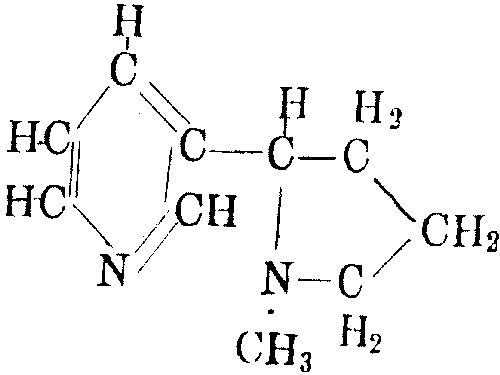
 Smoking may be bad for you, but researchers and biotech companies are quietly developing pharmaceuticals that are decidedly good for brains, bowels, blood vessels and even immune systems -- and they're inspired by tobacco's deadly active ingredient: nicotine. Nicotine acts on the acetylcholine receptors in the brain, stimulating and regulating the release of a slew of brain chemicals, including seratonin, dopamine and norepinephrine. Not surprisingly, the first scientific work that identified these chemicals and how they affect the body came out of nicotine research -- much of it performed by tobacco companies. Now drugs derived from nicotine and the research on nicotine receptors are in clinical trials for everything from helping to heal wounds, to depression, schizophrenia, Alzheimer's, Tourette Syndrome, ADHD, anger management and anxiety. "Nicotine is highly stigmatized -- and for good reason, because the delivery system is so deadly," says Don deBethizy, CEO of Targacept. "But the drug itself and the research generated by studying its effects on the brain both show great promise for helping us improve our physical and mental health."
Researchers Light Up for Nicotine, the Wonder Drug |
|
Birds, bees, mobile phones, and the apocalypse |
|
|
|---|
| Topic: Biology |
5:32 pm EDT, Apr 15, 2007 |
It seems like the plot of a particularly far-fetched horror film. But some scientists suggest that our love of the mobile phone could cause massive food shortages, as the world's harvests fail. They are putting forward the theory that radiation given off by mobile phones and other hi-tech gadgets is a possible answer to one of the more bizarre mysteries ever to happen in the natural world - the abrupt disappearance of the bees that pollinate crops. Late last week, some bee-keepers claimed that the phenomenon - which started in the US, then spread to continental Europe - was beginning to hit Britain as well. The theory is that radiation from mobile phones interferes with bees' navigation systems, preventing the famously homeloving species from finding their way back to their hives. Improbable as it may seem, there is now evidence to back this up.
I don't find this shocking. There are a few things worth pointing out, as this relates to the bigger picture of the risks and gains posed by technological advance... This could very well be for real, and if so is quite serious. All policy regulating technology is potentially dangers. Many things interrelate in the big picture. If heavy usage of certain areas of the frequency spectrum is killing bees, the correct solutions may be to breed/engineer bees resistant to it. When we discover a type of sonar is killing all the wales, you have to stop until you find a work around that don't start killing things in large numbers. In this case, bees are easier to experiment with, and their breeding is already controlled to a certain degree, so it's highly likely a solution is just going to involve playing god a bit. When regarding the places where public policy could collide with technology, research, and anything backed up with an argument that includes the phrase "playing god", one must remember that some problems can't be ignored, and some solutions like turning off all the cell phones are not reasonable approaches. If one technology is getting us unto a problem, another type of technology will most likely get us out. Unless we just drop the damn ball. I firmly believe that at this point, for the long run of humanity, it might be a good idea to entertain the area of "playing god" for a few decades... We might need to get good at that, in order to solve future problems. Plus, it sounds like fun work. I've found myself wondering before what we would have done if at some point we found out that the Eisenhower Highway System was screwing up migration patterns and killing all the birds.. And what the future equivalent of such a thing might be.. Furthermore, in a continuation of the William Gibson future meme. We already got ADD, now we have CCD.. I can't wait till we get to the point where we have NAS. heh.. Birds, bees, mobile phones, and the apocalypse |
|
A Cold War Cryptologist Takes a Crack at Deciphering DNA’s Deep Secrets |
|
|
|---|
| Topic: Biology |
8:38 am EST, Dec 13, 2006 |
"I'm a data guy. What I know about is how to analyze big, complicated data sets." In 2000, he pondered who had the most interesting, most complex data sets and decided "it had to be the biology people." Biologists are awash in DNA code. Last year alone, the Broad Institute sequenced nearly 70 billion bases of DNA, or 23 human genomes’ worth. Researchers are mining that trove to learn how humans evolved, which mutations cause cancer, and which genes respond to a given drug. Since biology has become an information science, said Eric S. Lander, a mathematician-turned-geneticist who directs the Broad Institute, "the premium now is on being able to interpret the data." That is why quantitative-minded geeks from mathematics, physics and computer science have flocked to biology.
A Cold War Cryptologist Takes a Crack at Deciphering DNA’s Deep Secrets |
|
Brain's Darwin Machine - Los Angeles Times |
|
|
|---|
| Topic: Biology |
7:17 pm EDT, Apr 13, 2006 |
Scientists find evidence of a perpetual evolutionary battle in the mind. The process, they suspect, is the key to individuality.
Brain's Darwin Machine - Los Angeles Times |
|
CNN.com - Labs told to destroy killer flu virus - Apr 13, 2005 |
|
|
|---|
| Topic: Biology |
6:18 pm EDT, Apr 13, 2005 |
] The World Health Organization urged laboratories Tuesday
] to destroy samples of a flu virus sent out for testing
] purposes after a Canadian lab identified the virus as a
] strain that triggered the 1957 Asian flu pandemic. ] That strain of the virus has not been included in flu
] vaccines since 1968, however, so the WHO warned
] laboratories in the United States, Canada and 16 other
] locations to destroy their samples immediately. ] The College of American Pathologists obtained the
] samples from Meridian Bioscience, a Cincinnati,
] Ohio-based vendor. The strain became known as the
] Asian flu after killing more than 1 million people,
] including about 70,000 in the United States, in a
] 1957 pandemic. "Oops! Didn't mean to send out that one.. Um, be careful folks!" CNN.com - Labs told to destroy killer flu virus - Apr 13, 2005 |
|
Scientists Create Remote-Controlled Flies |
|
|
|---|
| Topic: Biology |
1:17 am EDT, Apr 12, 2005 |
] Yale University researchers say their study that used
] lasers to create remote-controlled fruit flies could lead
] to a better understanding of overeating and violence in
] humans.
]
] Using the lasers to stimulate specific brain cells,
] researchers say they were able to make the flies jump,
] walk, flap their wings and fly. Coming soon: Orbital Mind-Control Lasers Scientists Create Remote-Controlled Flies |
|
Genetic Savings and Clone |
|
|
|---|
| Topic: Biology |
4:42 pm EST, Dec 23, 2004 |
The leading provider of pet gene banking and pet cloning services. ] Genetic Savings & Clone enriches the lives of pet lovers
] through superior cloning technologies. Cat cloning
] available today; dog cloning available in 2005. Great company name! Genetic Savings and Clone |
|